
Find the Unicorns
Articles | May 9 2026 | Tom Von Lahndorff
Find the Unicorns
I've been called a unicorn a few times in my career. Usually it's because I cross between design and development — I can build the thing and make it look right. In tech, this combination is rare enough that people pull out the word and use it like a compliment, but also like they're describing a slightly suspicious creature.
The other day I was watching Rick Beato interview Stanley Jordan — the video is called The Secret of Stanley Jordan's Two-Handed Technique. If you don't know Stanley Jordan, he plays guitar in a way I've genuinely never seen anyone else do — tapping both hands on the fretboard like it's a piano, playing melody and harmony simultaneously. One of the top comments on the video calls him a unicorn — and that word stuck with me. And the audience clearly loves it. That word again.
That got me thinking.
We don't appreciate the in-between people
Most of how the world is organized — job descriptions, music genres, academic departments, store aisles — is built around categories. You're a designer or a developer. You make country music or you make electronic music. You're a scientist or you're a writer.
But the most interesting people I know don't fit cleanly into one of those buckets. They sit in the middle. They pull from multiple disciplines and produce something that wouldn't have existed if they'd stayed in their lane.
And then we look at them and don't quite know what to do with them.
Job postings ask for "10 years of React experience" or "a senior visual designer with Figma chops." They don't ask for "someone who can think in systems, sketch in their head, and write production code that's also beautiful." Even though that last person is worth a lot more than the sum of the parts.
The cost of handoffs
The reason these people are so valuable is something I've watched happen a hundred times: every time work gets handed off from one specialty to another, something gets lost. The designer's intent doesn't quite make it to the developer. The developer's constraints don't quite make it back to the designer. The PM in the middle is doing their best, but they're playing telephone with two languages they don't fully speak.
A unicorn skips the handoff. They hold the whole thing in their head. The design and the implementation are decided together because they're the same brain. The result is more coherent and usually faster.
Genres are marketing categories
The music thing is especially interesting because genres aren't really descriptions of music. They're shelving labels for stores and playlists. They were useful when you had to decide which physical bin to put a CD in. They're a lot less useful now.
A modern artist might pull from country storytelling, electronic production, hip-hop rhythm, ambient texture, and pop structure — all in the same song. What do you call that? Spotify will pick a label and put them in a playlist, but the label is doing more work to organize the database than to describe the art.
The artists who interest me most right now are the ones who refuse to pick a lane. They sound like themselves, not like a genre. Tycho (Wikipedia · Apple Music · Spotify) is a great example — nominally "electronic" music, but woven through with real guitars, bass, and live drums in a way that makes a genre label feel beside the point.
It can be lonely in the middle
Being a unicorn isn't all upside. The trade-off is that you don't fully belong anywhere. Designers think you're too technical. Developers think you're too artsy. Musicians think your stuff doesn't fit the format. Specialists in any field will sometimes look at you and think, you're not a real one of us.
That used to bother me. It bothers me less now. I've come around to the idea that the in-between space is where the interesting work happens. The borders between fields are where new things get invented.
The people you meet out here
The best part of taking the less obvious path has been the people I've ended up working with along the way. Other unicorns. People whose mix of skills doesn't show up cleanly on a resume but absolutely shows up in the work they make.
There's a kind of instant recognition when you meet someone like that. You don't have to explain why you care about how something looks and how it works. They already get it. Some of the most rewarding collaborations I've had came from those connections — projects where everyone at the table was a little bit of everything, and we just made the thing together.
If you're one of these people — designer who codes, scientist who writes, musician who refuses to pick a lane, whatever your particular mix is — keep going. The borderlands are a good place to be.


Find the Unicorns
Articles | May 9 2026 | Tom Von Lahndorff
I've been called a unicorn a few times in my career. Usually it's because I cross between design and development — I can build the thing and make it look right. In tech, this combination is rare enough that people pull out the word and use it like a compliment, but also like they're describing a
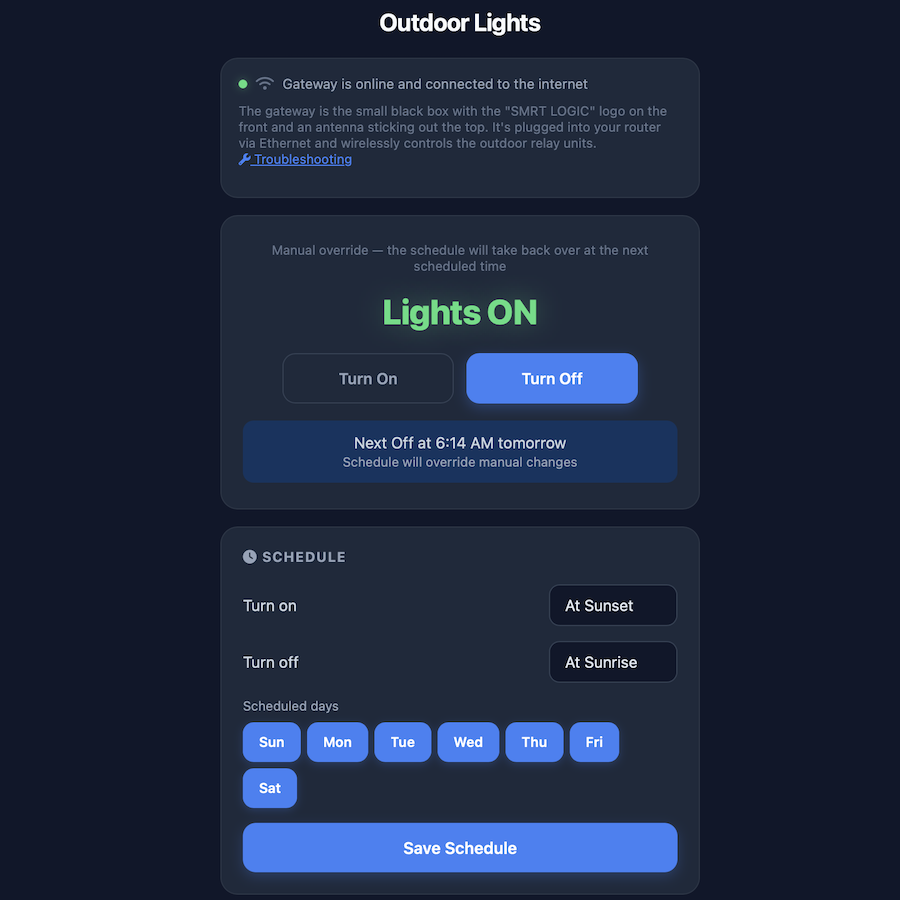
Building a Better Lighting Control App with AI
Articles | Apr 14 2026 | Tom Von Lahndorff
I have an outdoor lighting system at my house — the kind with a gateway, relay controllers, and scheduling based on sunset and sunrise times. The hardware itself is solid. The manufacturer's app? Not so much. It was slow, buggy, and clearly designed as an afterthought. Simple things like
10 CSS Features That Actually Work Everywhere Now (2025)
Articles | Nov 20 2025 | Tom Von Lahndorff
CSS has changed a lot in the past few years. Features that used to require JavaScript or preprocessors are now native. Things that seemed impossible are now standard. The performance impact is huge. Native CSS runs faster than JavaScript, doesn't block the main thread, and gets optimized by the
Top 10 Tips for Working with Claude Code
Articles | Nov 15 2025 | Tom Von Lahndorff
Working with Claude Code (Anthropic's official CLI for AI-assisted development) has been a game-changer for my development workflow. Over the past few months, I've used it across several projects - refactoring legacy code, building new features, and optimizing performance. Through trial and error,